SCOTT McCRACKEN Guesswork
Thames-Side Studios Gallery
13th - 28th January 2024
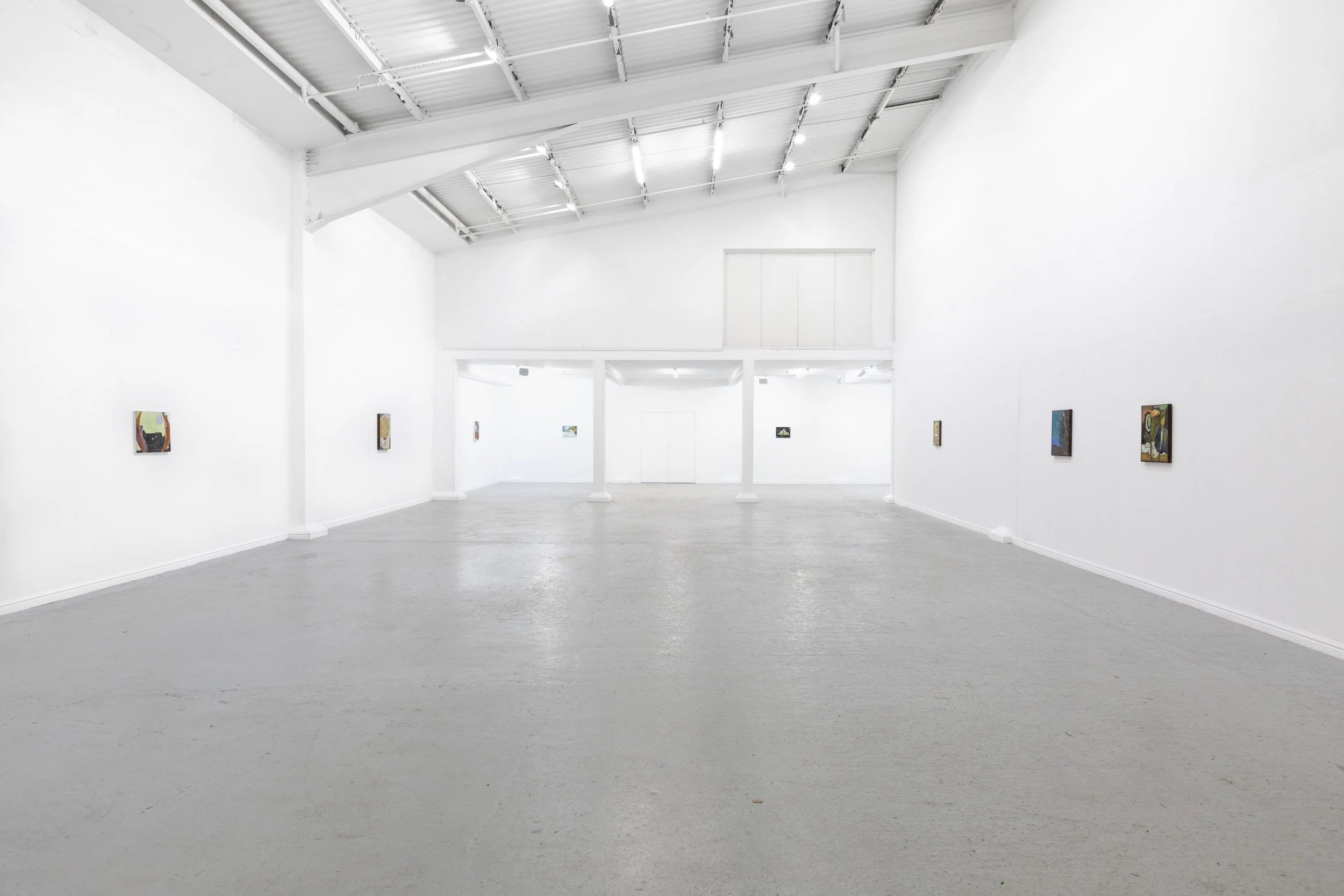
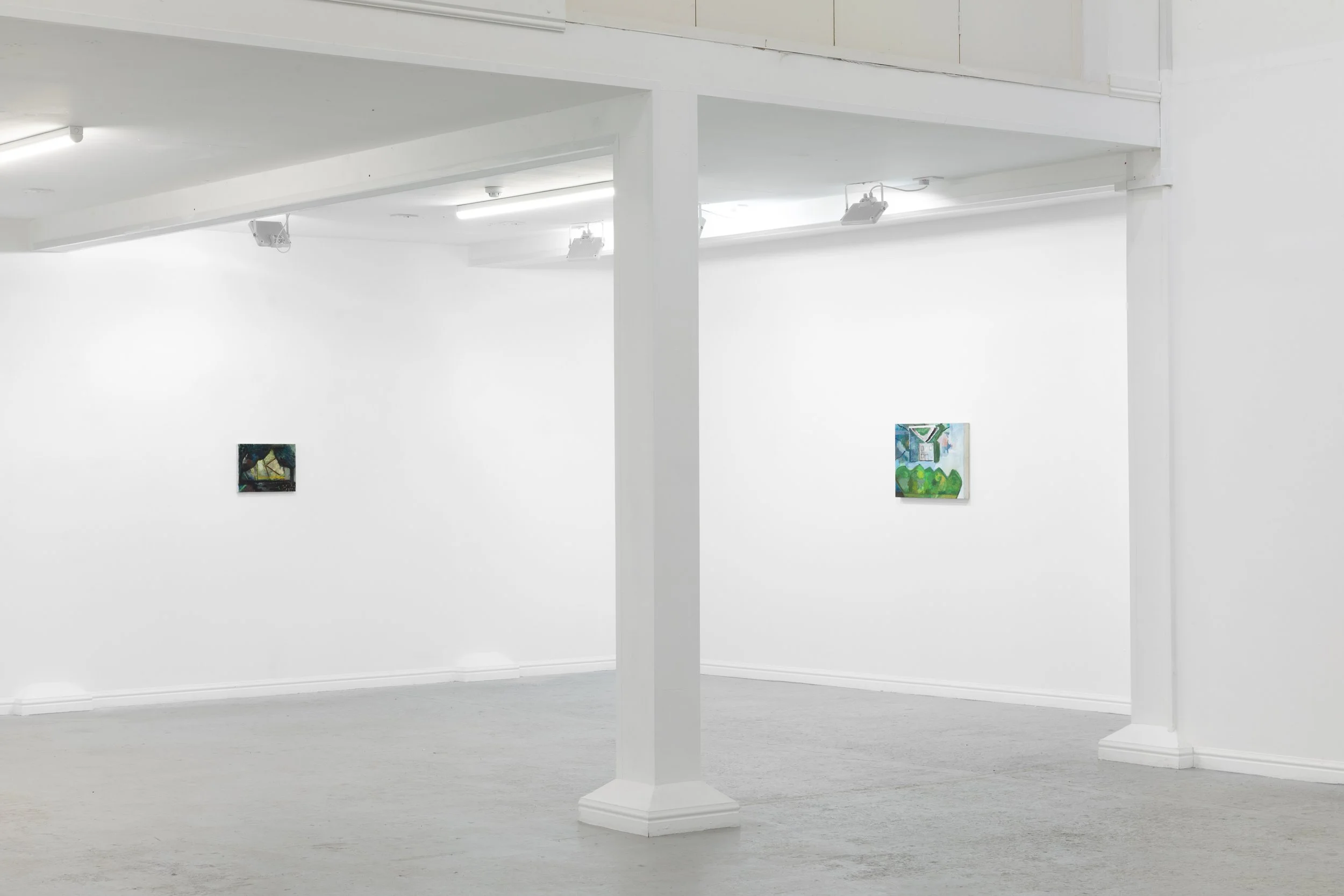
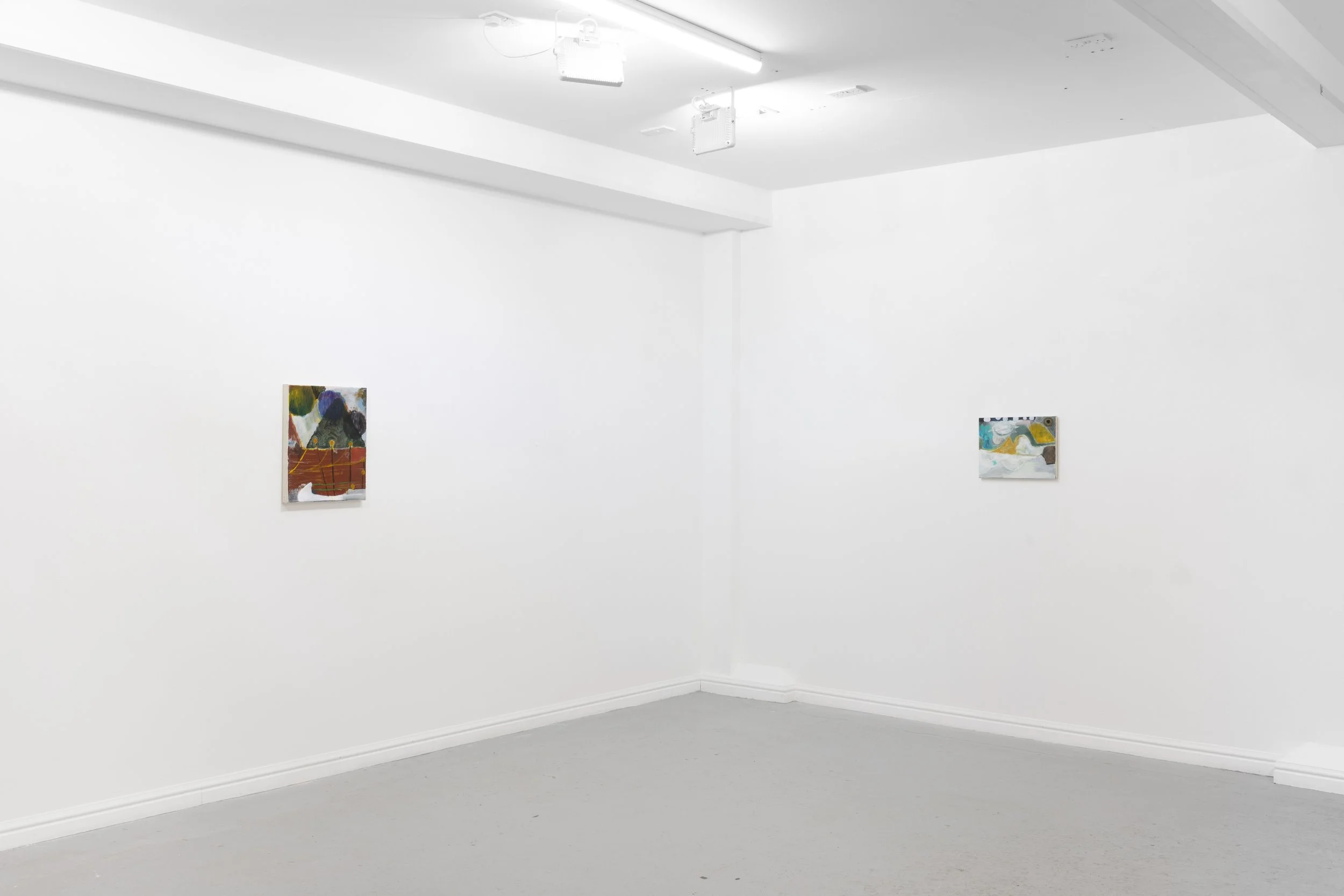
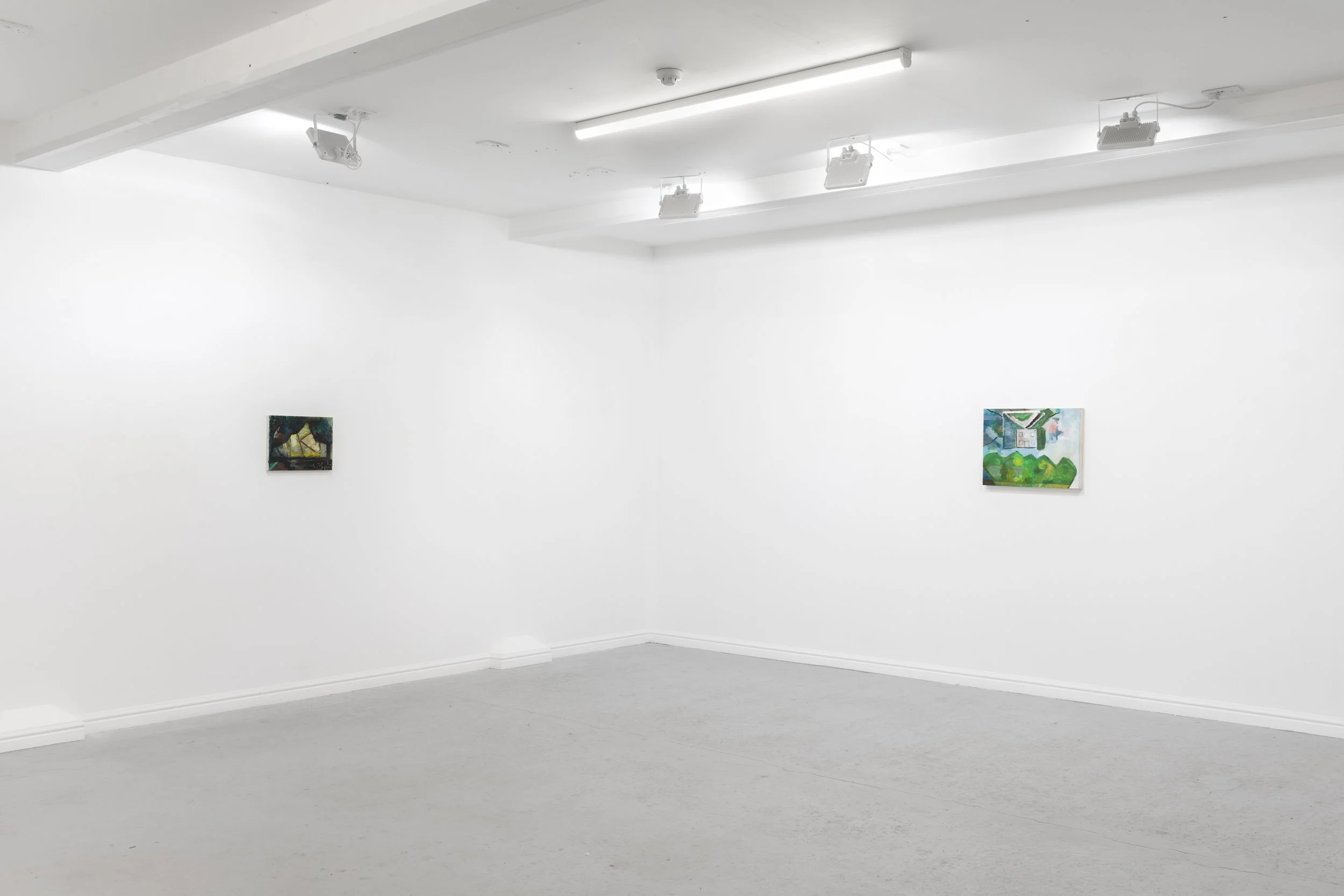
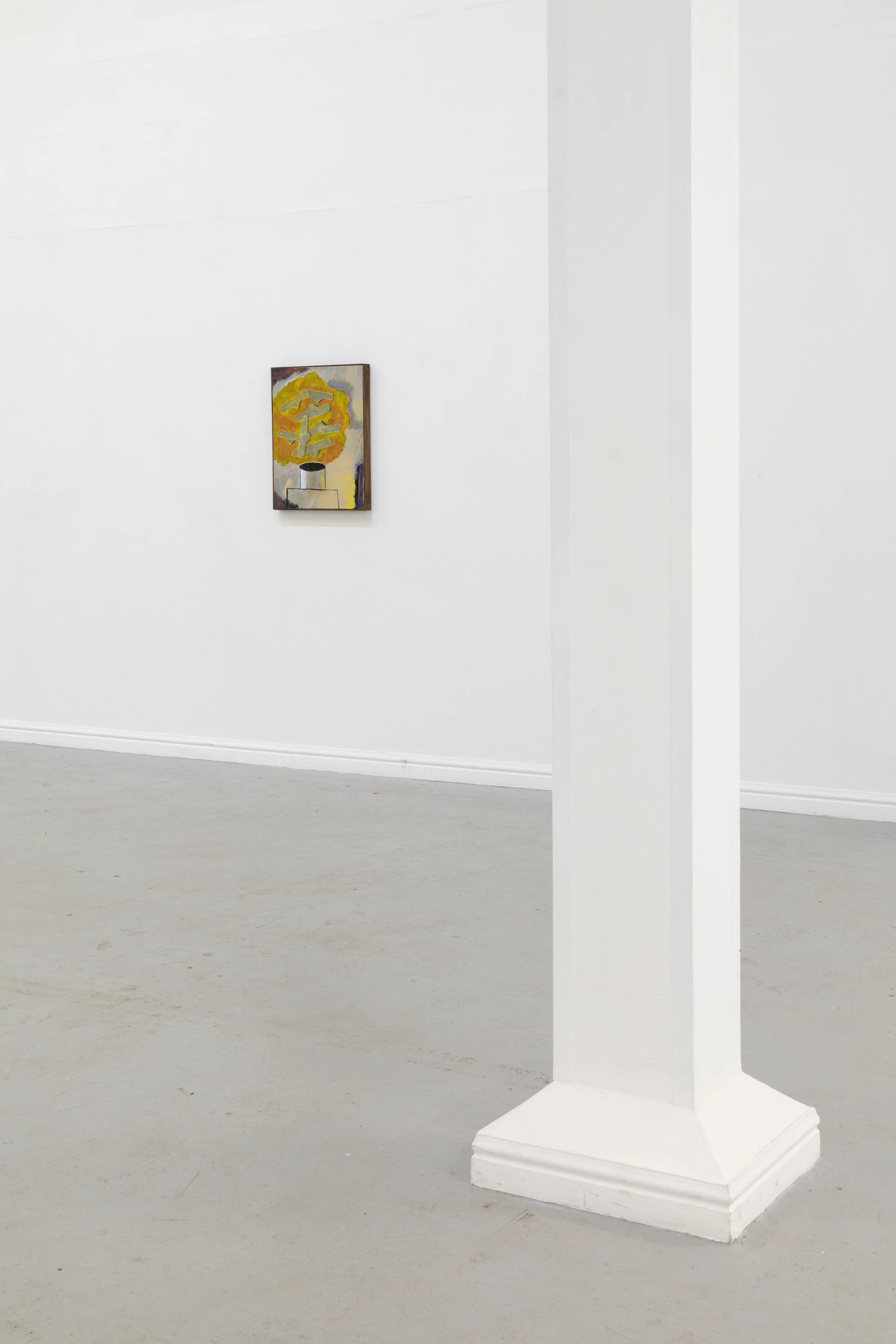
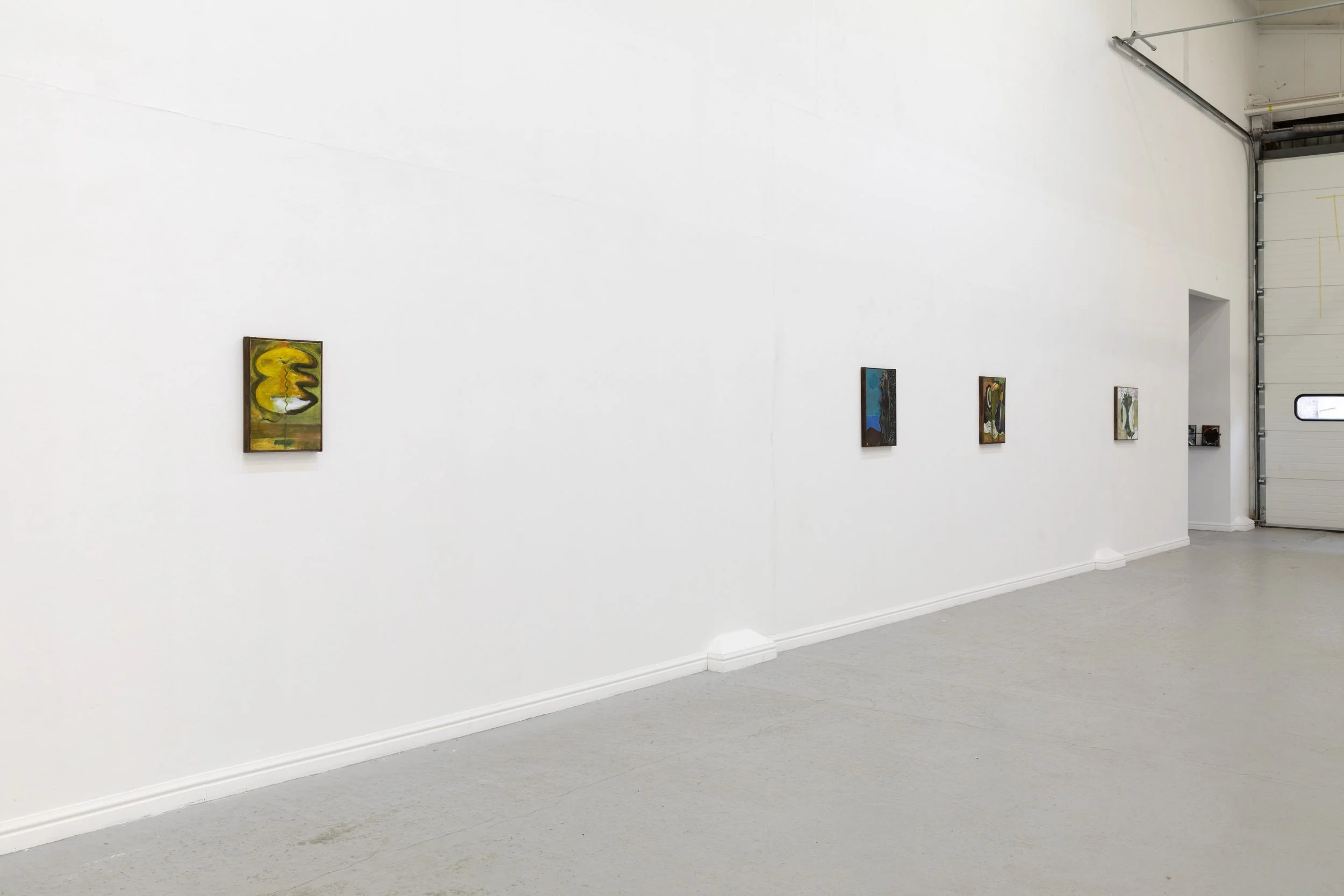
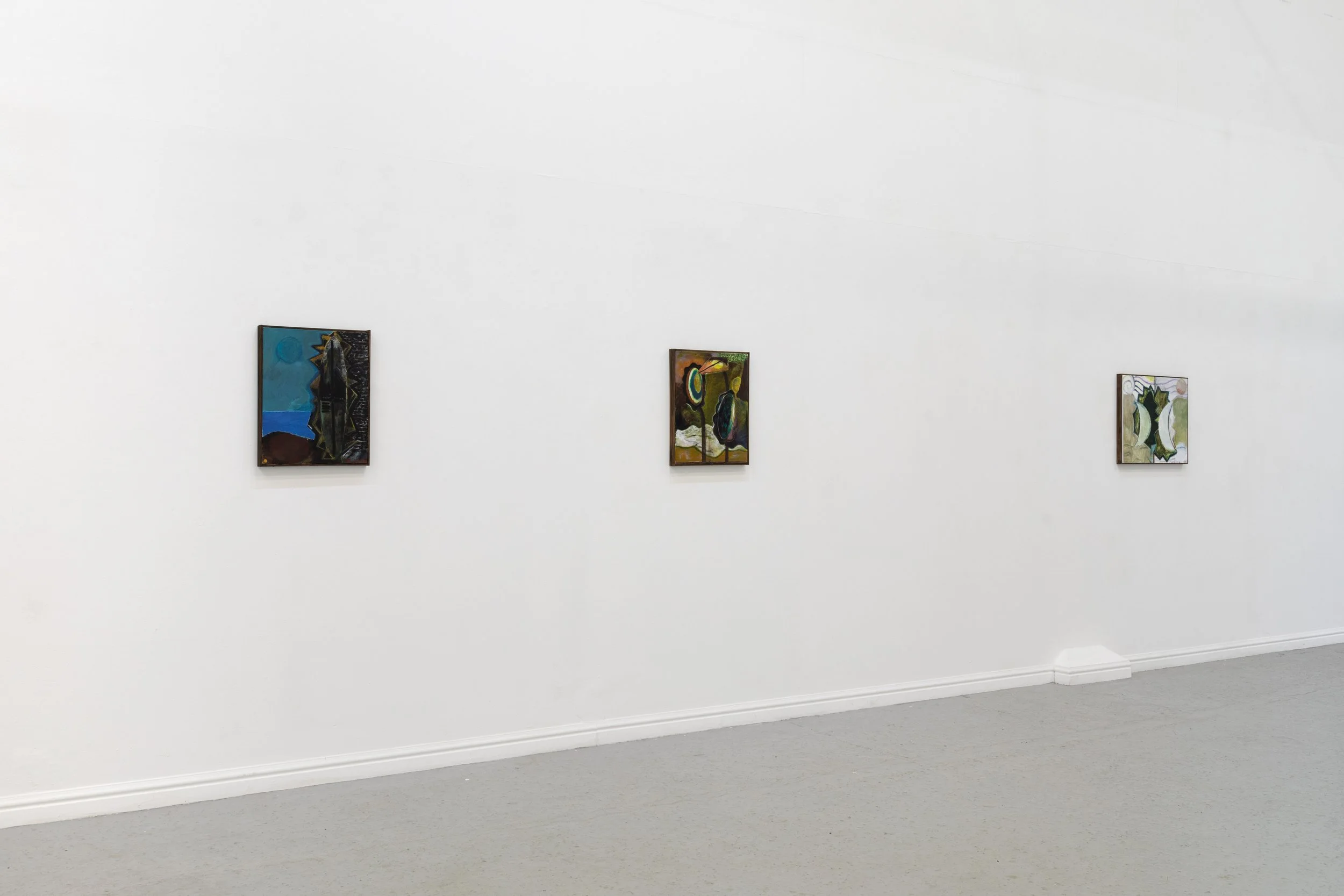
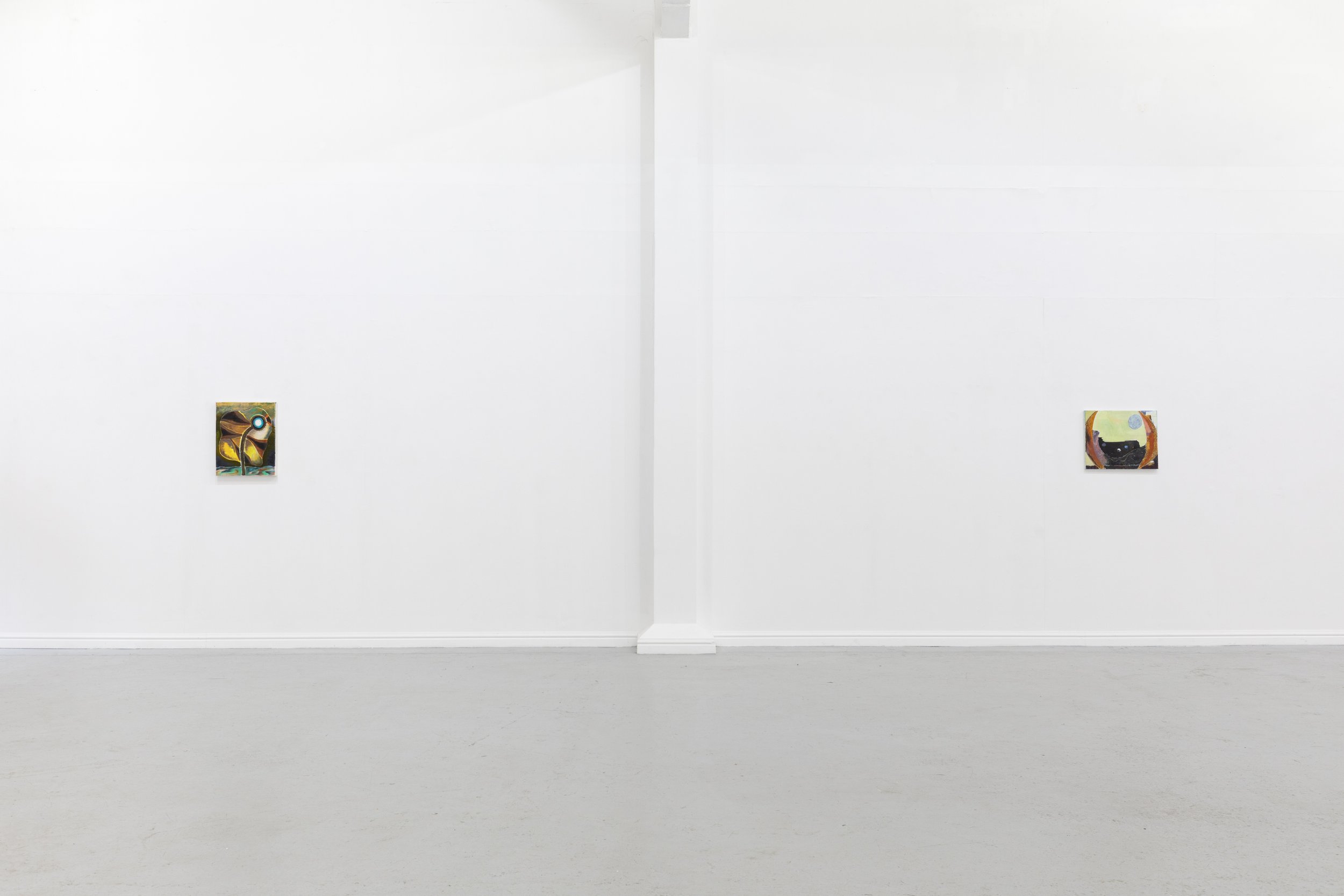
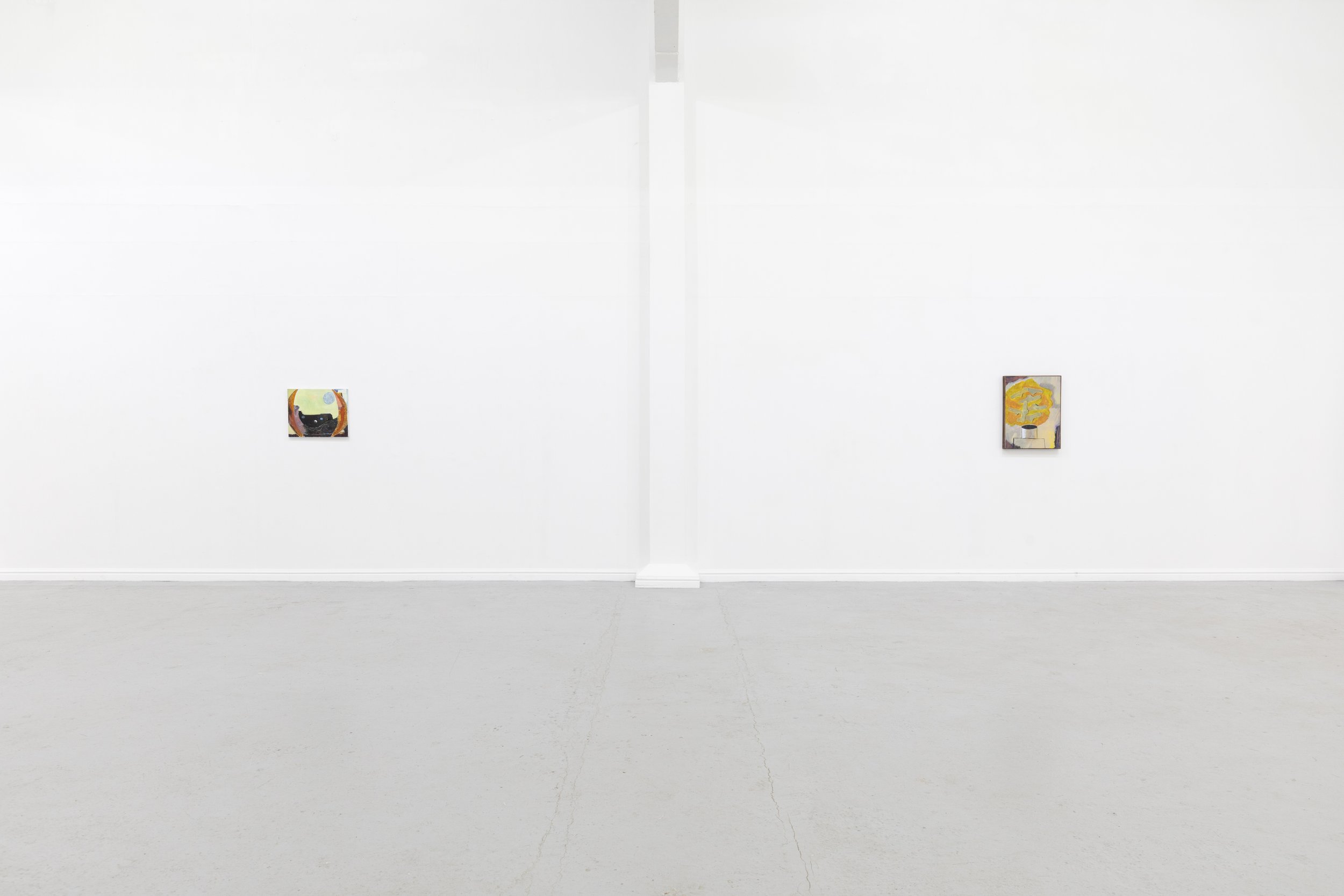
Three Notes on Guesswork
Mark Jackson
1
Scrawled lines on a wall somewhere remind McCracken of a kind-of-rainbow, but not as distinct as a rainbow—that’s just a way of telling me what he’d seen. And if it wasn’t for me asking the question, the lines might not have been turned into the word. When something catches your eye on the street and you notice, but walk on, then remember it, and it wasn’t worth taking a picture of at the time, but you then wish you had, because now you’re trying to recall it, with a brush and paint. Such is the studio life of this painter. Remembering and forgetting, and in trying to recall, doing that distinct painting thing, inventing.
2
If you can take an image from the mind’s eye, or an image of what you see in the real world, and get it from your mind onto your canvas, then you can own it, at least for a while. We discussed this last time I visited the studio—painting the things you want into existence… This could be a mantra for McCracken. But something undercuts his capturing, for here is a painter who has one hand on the brush and the other on the edge of the rug he’s about to whip out from underneath himself. It’s sabotage, if not for the fact that it’s a deliberate strategy towards new ends. Whilst that slippery recollection of what we’re calling a rainbow, is coming together, and the form is indeed reminding him of that brief glimpse, he stops mid-stroke, stops short of a recreation of the memory. Because this is a painting and not a memory, he reminds himself.
3
Capture. Copy. Distract. Stop. Repeat, but do it differently. These paintings are built of curtailed attempts. McCracken paints with provisionality, not so much as in the provisional painting that surfaced around the 2000s that looks unfinished (even when finished). Instead these are arrangements of unfinished things that are made to interlock, overlap, and finish with each other. What’s left is an aggregated, choreographed assortment of provisional moves, that each give way to the greater good of the whole and become beautifully bound together in small rectangles.
Off-World Reality
Heike Kelter
Following the development of Scott McCracken’s paintings, I noticed an expansion of the forms; in shapes and colour.
This has led to a transition of understanding and what it means to create a painting. In his earlier work, strong and expressive, three-dimensional shapes suggested an idea of other world objects, known but unknown, creating a voluminous tension in the picture.
Now these forms and shapes dissolve, more and more, into a spacious colourful atmosphere. The earlier and strongly defined interaction of shapes within the paintings are transformed into a new amorphous state by dissolving into a colourful space.
It is as if the viewer cannot really define anymore what is happening on the picture plane as there seems to be a new reality beyond clear definitions and borders.
Through this McCracken creates a distinct reality with a possible link to an unknown landscape or still life but importantly he projects a particular atmosphere - unique unto himself - unfolding an off-world reality of its own.
A Grammar of Forms
Rachel Jeffers
You’ve likely never heard of a sombrero hole but you’d know one if you saw it. The term refers to the standard type of hole punched into product packaging that allows merchandise to hang from display hooks. Its shape resembles the silhouette of a sombrero – the hat. The hat – its name meaning shade or shadow – is designed to act as a shield from the sun. I don’t know whether “sombrero hole” describes just the hole in the packaging, or whether it also describes the remnant of card stock (the positive space) that has been removed. Neither does my search engine. Instead, it offers me an article about the Sombrero Galaxy.
Which brings me back to the sun. In Scott McCracken’s paintings, suns are a frequent motif. Or maybe they’re circles? Some of the circles act like bullseyes. Others appear to spin, like pinwheels, or rotate, like gears in a machine. To look at these paintings is to see the painter’s consciousness at work. It is a grammar of forms, the emphasis placed, changed, and reiterated. Parentheses become crescent moons; an aside made solid. Exclamations become soundwaves become tides. A thought bubble contains a wordless quote, underlined until the lines themselves become the statement. Traces of earlier permutations of the painting are revealed, remnants of past decisions, like long dead stars whose light is still reaching us.
Toggling between construction and alchemy, McCracken uses elemental shapes as building blocks. He combines depth with flatness, light with shadow, lava with water. He establishes the ground, then reconsiders, and chooses the ether. He zeroes in on the smoking residue after the “POW!”. It is the ghost of an experience, seeping from an envelope. Scattered, turned, and repeated until ashes are all that’s left, a puddle after the flood. Your position is marked: YOU ARE HERE. But this is no map, only a collection of Xs. You have arrived at your starting point. You have reached your destination.